SCULPTURE FOR THE HOME


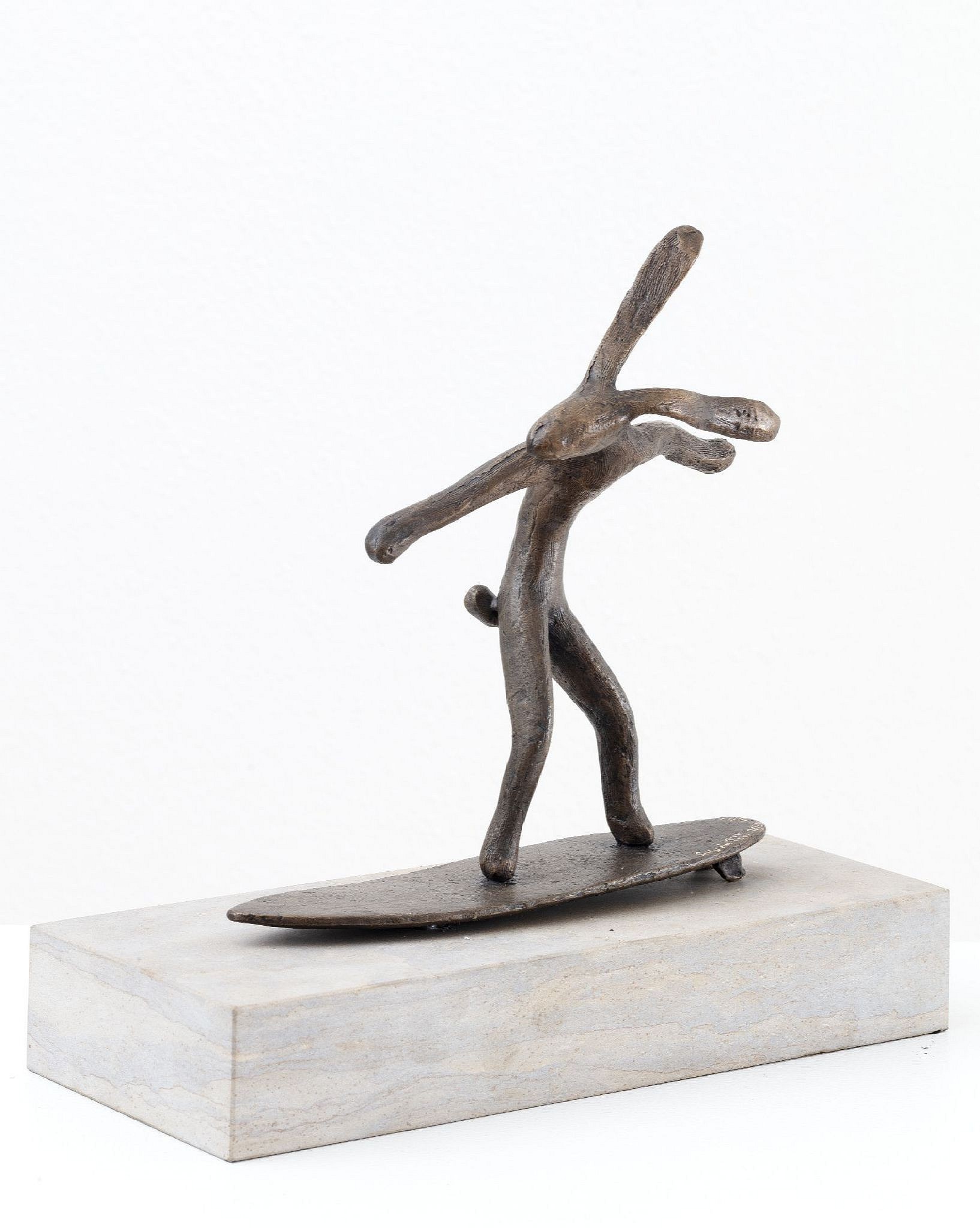
BEEZY BAILEY, Airplane King
Hand painted bronze, 40 x 90 x 6.5 cm
One of South Africa’s most colourful and celebrated artists, Beezy Bailey has exhibited internationally for nearly 40 years. He is a multi-disciplinary artist whose practice includes painting, sculpture, drawing, printmaking, and ceramics. Reflecting on the ideas and imagery for his work, in his own words he tells us, ‘frozen dreams, images and legends enter from my subconscious … the realm of my imagination. I act as a conduit for visual messages greater than I am.’ Figures in flight frequent Bailey’s work and pay homage to the generations before him; his father was an RAF pilot during the second world war, and his grandmother an outstanding female aviator who flew a pioneering solo flight from London to Cape Town and back in 1928. More generally, Bailey aspires to create art as a balm for a mad world – a corrective for our most lamentable human qualities, including a planet brutalized by extremes of wealth and poverty, environmental ignorance, and negligence. ‘For every degree of darkness in the world, there has to be an inverse degree of light, so that we can see it all. So it is light that I search for – light of the flame of humanity, light that has to shine out of my work.’


NICOLA BAILEY, Sharing in the Shadow (Luna)
Bronze, 12 x 15.5 x 8.5 cm


DEBORAH BELL, Four pillars dancing East
Bronze, 41 x 10 cm
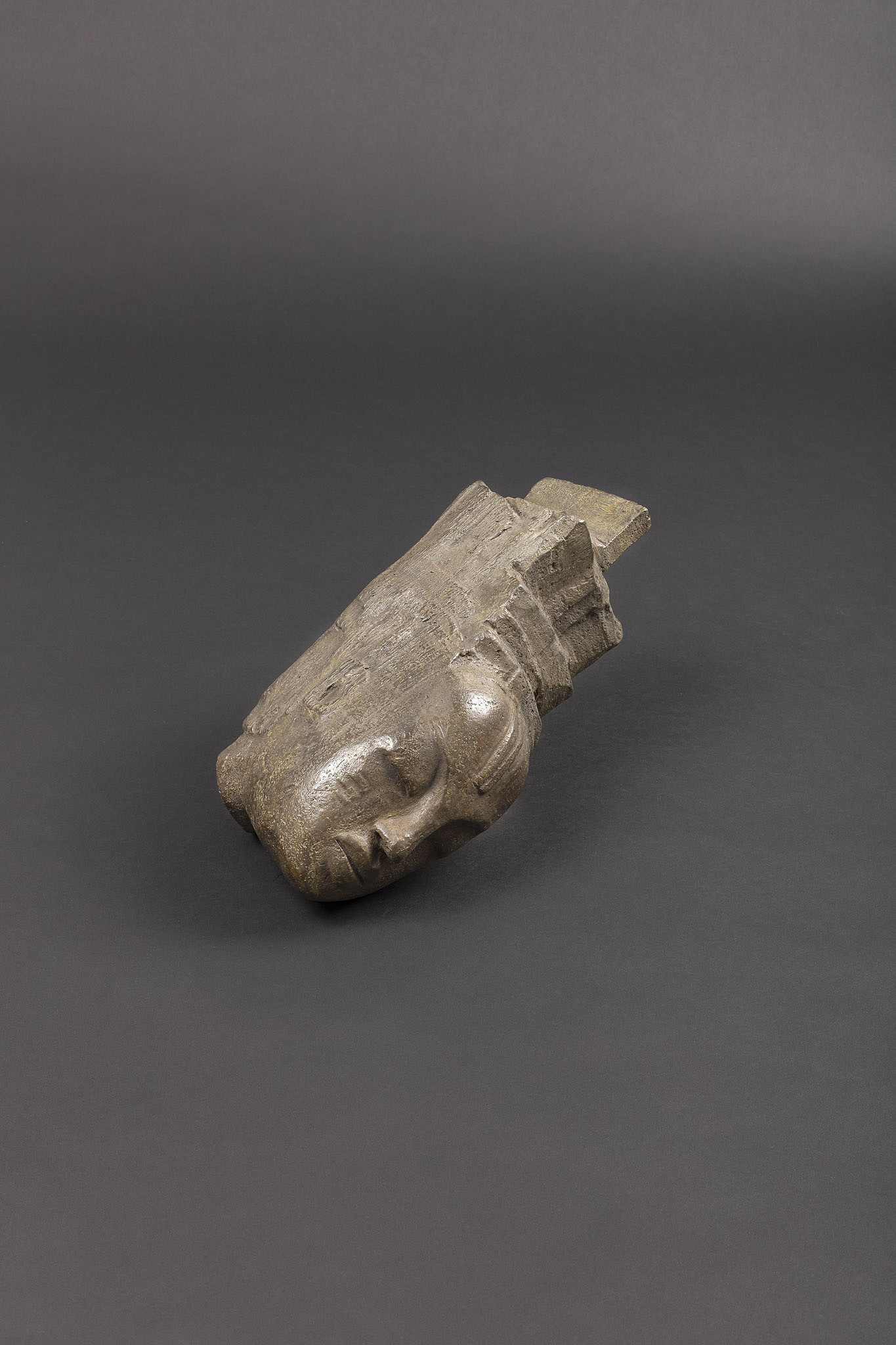


DEBORAH BELL, Young Lioness and Figure
Bronze, 18 x 34 x 10 cm


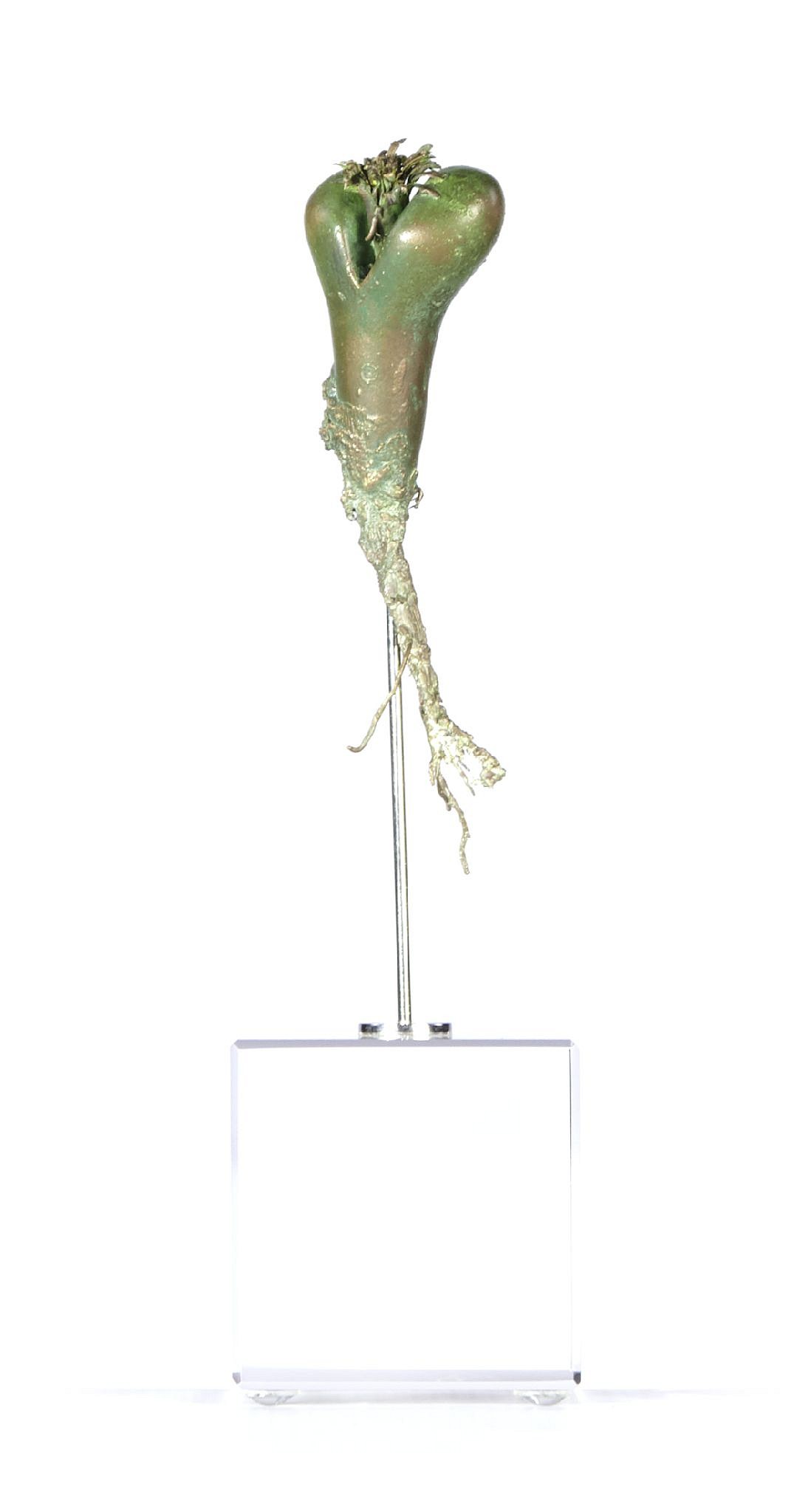
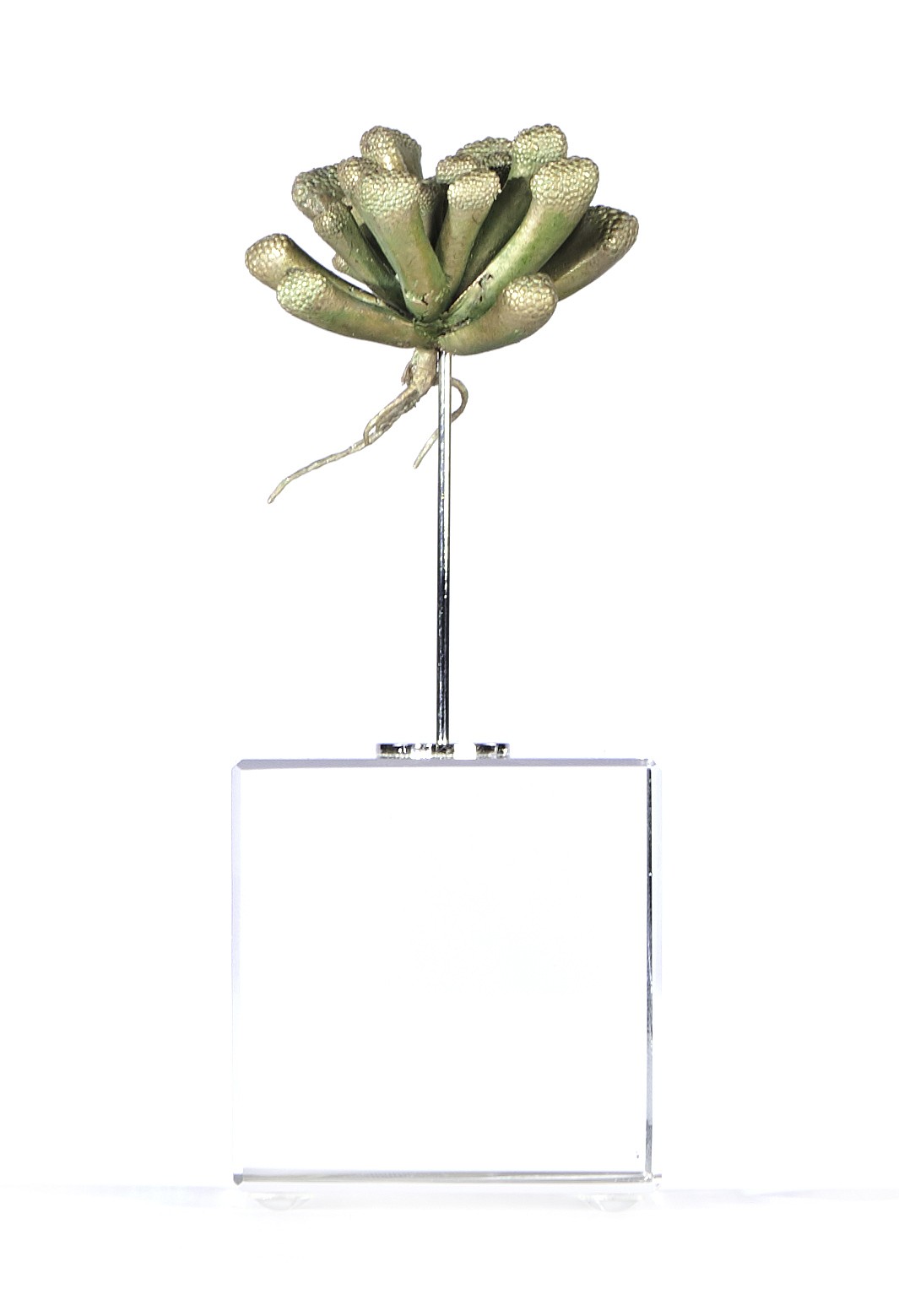
NIC BLADEN, Faucaria tigrina
Bronze on crystal base, 13 x 7 x 7 cm
South African artist Nic Bladen is one of the world's finest botanical sculptors working today. Bladen strives to record the subtle and diverse biodiversity of his native Western Cape by creating unique bronze sculptures using the actual plant matter. Drawing on the ancient traditions of the lost wax method, Bladen has pioneered a new technique which has allowed him to render the finest organic details of his subjects.
Faucaria tigrina, this somewhat ferocious-looking succulent gets its name, tiger-jaws, from the appearance of the toothed, triangular shaped leaves which seem to drip with 'saliva' and are held ajar in a menacing poise.
NIC BLADEN, Lithops sp. (ii)
Bronze on crystal base, 18.2 x 5 x 5 cm
South African artist Nic Bladen is one of the world's finest botanical sculptors working today. Bladen strives to record the subtle and diverse biodiversity of his native Western Cape by creating unique bronze sculptures using the actual plant matter. Drawing on the ancient traditions of the lost wax method, Bladen has pioneered a new technique which has allowed him to render the finest organic details of his subjects.
Lithops is a genus of succulent plants in the ice plant family, Aizoaceae. Members of the genus are native to southern Africa. They avoid being eaten by herbivores with their camouflage as small stones, and are often known as pebble plants or living stones.
NIC BLADEN, Titanopsis primosii
Bronze on crystal base, 12.6 x 5 x 5 cm
South African artist Nic Bladen is one of the world's finest botanical sculptors working today. Bladen strives to record the subtle and diverse biodiversity of his native Western Cape by creating unique bronze sculptures using the actual plant matter. Drawing on the ancient traditions of the lost wax method, Bladen has pioneered a new technique which has allowed him to render the finest organic details of his subjects.
The delicate, frosted wafers of Titanopsis promosii grows thickly nestled into greysh-white pebbles and gravel which this Titanopsis resembles to an unbelievable degree, this camouflage allows them to escape detection and is a very effective strategy for escaping predation.


ARABELLA CACCIA, Blue Planet III (unique)
Bronze and ultra marine blue, 32 x 27 x 27 cm



LUCA EVANS, Counterpunch
African mahogany, birch, cherry, kiaat, maple and walnut on pine, 40 x 27.8 cm
Luca Evans currently work from a studio in Paarden Eiland, where they utilise a hit-and-miss experimental approach to carpentry and marquetry. Their pop-ish work plays with ideas around language, failure, mishap and humour. Text and object are assembled interchangeably. Luca’s practice employs a cut and paste approach. They work with marquetry, an archaic woodworking method in which thin pieces of wood are assembled like jigsaw puzzles. Although they work predominantly with wood, their practice is intercepted with moments of print, animation and painting.


LUCA EVANS, Knockoff
African mahogany, birch, cherry, kiaat, maple, meranti, teak, walnut, wenge, yellow wood and aluminium on pine, 26 x 22.4 x 7 cm
Luca Evans currently work from a studio in Paarden Eiland, where they utilise a hit-and-miss experimental approach to carpentry and marquetry. Their pop-ish work plays with ideas around language, failure, mishap and humour. Text and object are assembled interchangeably. Luca’s practice employs a cut and paste approach. They work with marquetry, an archaic woodworking method in which thin pieces of wood are assembled like jigsaw puzzles. Although they work predominantly with wood, their practice is intercepted with moments of print, animation and painting.


LUCA EVANS, Man on train sneezes, whispers "bless me"
cotton rag canvas and house paint, 43.5 x 34.5 cm
Luca Evans currently work from a studio in Paarden Eiland, where they utilise a hit-and-miss experimental approach to carpentry and marquetry. Their pop-ish work plays with ideas around language, failure, mishap and humour. Text and object are assembled interchangeably. Luca’s practice employs a cut and paste approach. They work with marquetry, an archaic woodworking method in which thin pieces of wood are assembled like jigsaw puzzles. Although they work predominantly with wood, their practice is intercepted with moments of print, animation and painting.
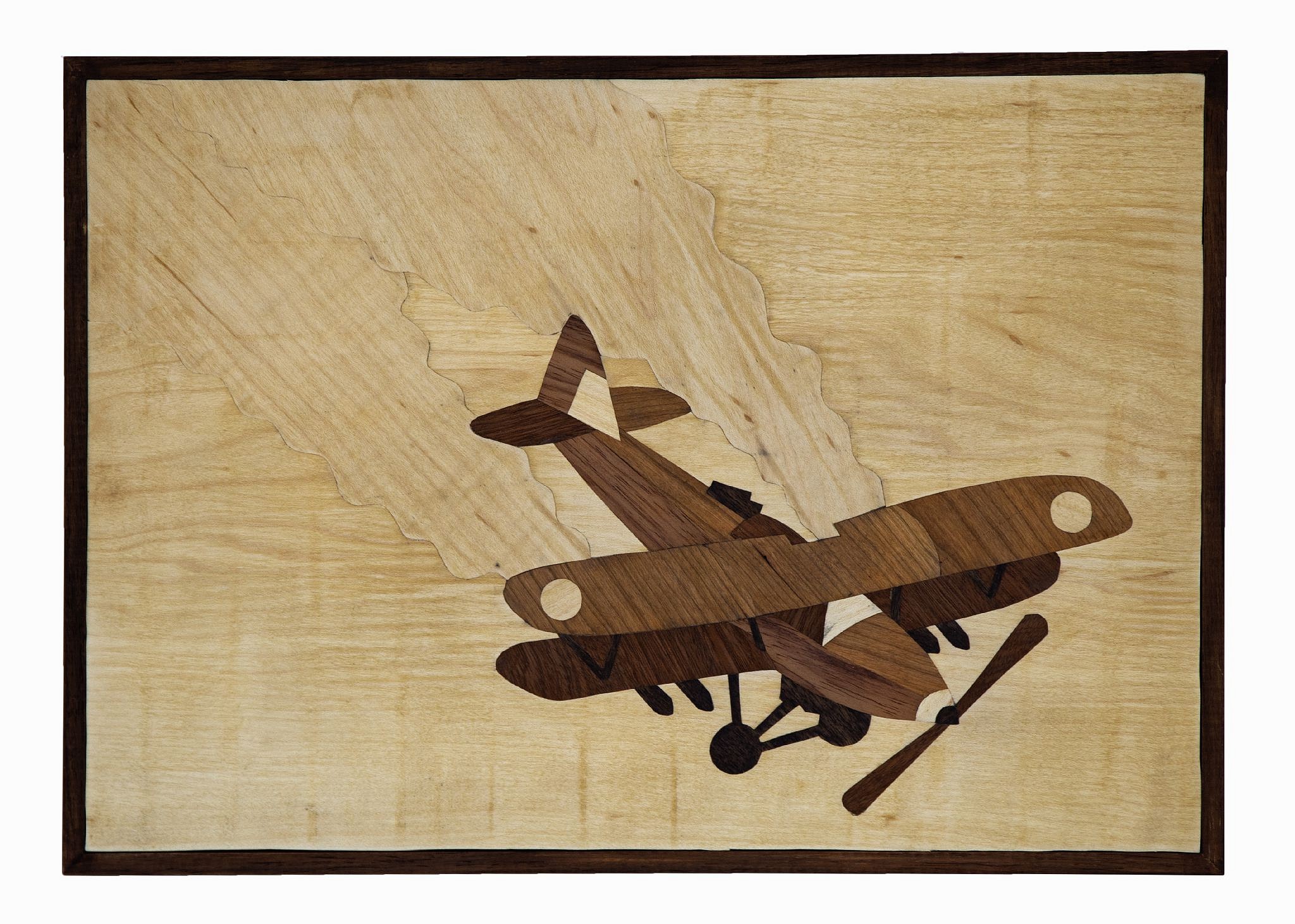

LUCA EVANS, The Crash
African mahogany, birch, cherry, kiaat, maple and walnut on pine, 30.5 x 43 cm
Luca Evans currently work from a studio in Paarden Eiland, where they utilise a hit-and-miss experimental approach to carpentry and marquetry. Their pop-ish work plays with ideas around language, failure, mishap and humour. Text and object are assembled interchangeably. Luca’s practice employs a cut and paste approach. They work with marquetry, an archaic woodworking method in which thin pieces of wood are assembled like jigsaw puzzles. Although they work predominantly with wood, their practice is intercepted with moments of print, animation and painting.


DYLAN LEWIS, S398 Buffalo Bull Pair (Miniature)
Bronze, 15.5 x 14 x 24 cm


DYLAN LEWIS, S400 Charging Black Rhino Miniature
Bronze, 13 x 10 x 23 cm
Dylan Lewis is Africa’s most internationally renowned living figurative sculptor. Collectively Lewis’ bronzes of felines form perhaps the most powerful commentary on nature and wilderness that has been made by any artist of this era. His cats are far more profound works of art than mere contemporary animalia bronzes. Indeed, they fully interrogate the lithe, almost boneless, grace of these apex predators – creatures that impart by their very presence a palpable tension to any true wilderness.
Lewis’ cats are imbued with a unique dense energy by an artist who, through a lifetime of immersing himself in pristine natural environments, somehow contrives to elevate his sculpture into a homage not only to the singular animals but indeed to their ancient lineages. Lewis’ bronzes fully capture the essence of an organism perfectly adapted to its habitat – the bodily expression of DNA adapting to eons of inexorable environmental change. In the presence of his art, it does not take long
to be affected by the rare brilliance and self-confident virtuosity honed by decades of work both in nature and his studio.
Whilst his cat sculptures have attracted collectors’ attention, Lewis has gradually shifted vision and focus onto the human figure. Elements of humanity began to be hinted at in some early sculptures in the artists development. A growing body of recent work featuring highly charged emotional and erotic human forms now dominate much of this fascinating sculptor’s artistic output.
Lewis’ sculpture has been avidly collected internationally for decades and this has resulted in two auctions at Christies being wholly dedicated Lewis’ bronzes.
Dylan Lewis lives in Stellenbosch, South Africa. He has developed a unique sculpture garden where some of his most celebrated bronzes may be viewed within the natural environment that intellectually nourishes their maker.


DYLAN LEWIS, S409 Running Cheetah III (Miniature)
Bronze, 14 x 10 x 29 cm


CHRISTOPHER MARVELL, La vie en rose
Bronze on Oak, 67 x 20 x 26 cm
Christopher Marvell’s work is imbued with his patient observations of the natural world. His whimsical animals, birds, and figures eschew extraneous detail while retaining familiar characteristics and conveying both pathos and humour.
Marvell grew up in Clacton before studying at the University of Newcastle upon Tyne (1982–6). Later he moved to Cambridge and began working in a studio at Fulbourn Manor with artist and designer Majorie Townley. In Cambridge Marvell met his future partner, the painter
Elaine Pamphili, with whom he bought a 400-year-old house which they set about renovating.
Working primarily in Cambridge, Marvell also spends time at his home in St Ives and draws inspiration from both Cornish history and the landscape.
Marvell has exhibited throughout the UK. His work is held in public and private collections in the UK and internationally.
‘Walking daily through the landscapes around the studios gives a constant focus for what I am trying to make. My sculptures have a quiet English based quality of man and nature. In the way that we hear countryside through Britten or Vaughan Williams. It is the business of observing acutely and recording – of searching for the line and shape and images. You have to make art from what you know about – a celebration of locality.’


LUCINDA MUDGE, Born to Wish for More
Ceramic, gold lustre, 56 cm
Lucinda Mudge is a contemporary South African artist working primarily in the medium of ceramics.
As a ceramicist, Mudge’s chosen medium is fragile by nature, and prone to fracture. Sudden changes in temperature in her kiln can cause her large-scale vases to crack, crumble, or collapse, rendering months of hard work futile. In Mudge’s love affair with ceramics, this crazing of clay is akin to heartbreak. It can start slowly – small cracks appearing and spreading, familiar patterns disintegrating, once bright hues fading into oblivion – or it can all fall apart without warning. ‘It’s a brutal choice of material,’ says the artist, and, like love, it can bring both great joy and great misery. But it is this chaos and unpredictability that is central to both our existence and Mudge’s work. Moreover, the choice of the vase as a canvas holds great significance. Commonly a functional household object, the vase has a presence which is genuinely welcoming and affirming; It is a familiar and domestic object.
Mudge’s extraordinary vases captivate the eye with their rich colours and intricate detail. Both a visual and a socio-political record, her work draws inspiration from a wide variety of references, including cartoons, pop songs, fabric designs and Art Deco vase patterns, resulting in whimsical collisions of the popular and refined, the mundane and elevated, the violent and the beautiful. This range of contemporary and historical sources merge to present a complex narrative familiar to many South Africans. With hand-mixed glazes and stains and produced painstakingly slowly, each piece is as unique as the narrative it tells. Themes, images, and text are reworked and reshuffled, embodying in their very fabric humanity’s ability to carry contradictory impulses simultaneously.
Lucinda Mudge has worked in major corporate and private collections nationally and internationally, including the United Kingdom, Australia, Guernsey, the Netherlands, Italy and Russia. Lucinda’s work was also exhibited at the Guggenheim Bilbao, Spain, as part of the exhibition Making Africa (2015).


OLIVIA MUSGRAVE, Hungry Goat, 2014
Bronze, 38.5 x 28 x 18 cm (15 1/8 x 11 x 7 1/16 in.)
Edition of 9


OLIVIA MUSGRAVE, Crossing the Night Sky
Bronze, 39 x 59 x 15 cm
Olivia Musgrave's work is drawn both from life and from the imagination where she draws inspiration from Greek mythology, as well as influences from 20th Century Italian sculptors, including Marini, Martini, Greco and Manzu


WILLIAM PEERS, Fahn
Carrara marble, 48 x 39 x 32 cm


WILLIAM PEERS, Ilona ||
Portuguese Marble, 41 x 35 x 5 cm
Peers’ sculptures exist as a celebration of form and shape. The apparent weightlessness of his abstractions belie the intensive labour that creates the impossibly clean curves. It is as if the stone has absorbed Peers’ fierce concentration and infused the sculpture with energy and movement. Indeed, Peers believes that created objects hold in them, all the industry that went into their production; ‘Not just the attention that is paid them – but the intention.’


WILLIAM PEERS, Morsha
Portuguese Marble, 39 x 41 x 12 cm


RINA STUTZER, The Messenger
Bronze, Copper, Patina, 48 x 75 x 50 cm
Rina Stutzer’s work is elusive; in a constant process of becoming, the pieces evolving out of each other, often guided by intuitive impulses. She is drawn to making works that are not fixed; whose identity is ambiguous (as with the crow) and transitory, provisional (as with the nomad). All we know of the world is that we are passing through it and the the works in this exhibition poignantly telegraph the impermanence of all things.
“Stutzer uses crows in her work as a metaphor for human beings and their place in the world. We are reminded of Ted Hughes’s crow poems – where the corvid is infinitely adaptable, unpredictable, inexhaustible, and capable of mischief. Here the crow also stands for the artist herself: both operate outside of society, both are subversive, and both are tricksters playing with the possibilities of reality.
The tent is a recurring image in her work and here Stutzer’s structure is made of delicate and ephemeral twigs - a temporary dwelling, not unlike our own skins, that we inhabit during our journey through the world. “The tent is explicitly yonic in many of Stutzer’s works; we are reminded of the emergence of humanity into the world, the birth of a child – the human spirit moving from womb to world, belonging in neither, only ever visiting both.” - Miranthe Staden Garbett
Stutzer’s female form in “corpse pose” is between life and death, in a state of transition between different realms, impossible to pin down.
Contact: info@everardlondon.com
Image credit: Carla Crafford / Dan Weill Photography


SHANY VAN DEN BERG, My vase het begin groei I (My vase has begun to grow I)
Bronze, 48 x 44 x 44 cm
To capture a plant on canvas or in bronze is to stop time – to give it eternity. For Shany van den Berg, depicting plants is a matter of self-reflection. She is sharing the love, purity, passion, beauty, innocence, death and new life of the garden within.


SHANY VAN DEN BERG, My vase het begin groei II (My vase has begun to grow II)
Bronze, 63 x 55 x 55 cm
To capture a plant on canvas or in bronze is to stop time – to give it eternity. For Shany van den Berg, depicting plants is a matter of self-reflection. She is sharing the love, purity, passion, beauty, innocence, death and new life of the garden within.

For almost three decades Florian Wozniak has worked independently as a contemporary artist in South Africa. Working primarily in bronze, the artist’s smooth, figurative forms feel rooted to the earth and convey a powerful serenity. His sculptures are by turns tender and endearing, playful and witty; his characters often evoking pathos or humour.


FLORIAN WOZNIAK, Doldrums
Bronze on stainless steel base, 17 x 17 x 17 cm
For almost three decades Florian Wozniak has worked independently as a contemporary artist in South Africa. Working primarily in bronze, the artist’s smooth, figurative forms feel rooted to the earth and convey a powerful serenity. His sculptures are by turns tender and endearing, playful and witty; his characters often evoking pathos or humour.


FLORIAN WOZNIAK, Seated Woman
Bronze on stainless steel base, 24 x 20 x 17 cm
For more than three decades Florian Wozniak has worked independently as a contemporary artist in South Africa. Working primarily in bronze, the artist’s smooth, figurative forms feel rooted to the earth and convey a powerful serenity. His sculptures are by turns tender and endearing, playful and witty; his characters often evoking pathos or humour.
Wozniak seeks transcendence through his work, a release from the constraints of the corporeal. This counterpoint is explored in the interplay between mass, weight, volume, and structure on the one hand, and fluidity, motion and grace on the other. Wozniak’s Dreamer curls in on himself but his gaze his skywards.
Optimism is implicit in every piece Wozniak sculpts and is palpable in the finished object. It is no surprise that he identifies so strongly with the sentiment of 20th century, Italian sculptor, Arturo Martini, when he said, ‘In this Babylon, where everyone has lost [their] senses, my sculpture could bring them some joy in its clarity and vibracy.'